

Borgo Egnazia WEDDING
When Hospitality Becomes Part of the Celebration

A World Inspired by Puglia
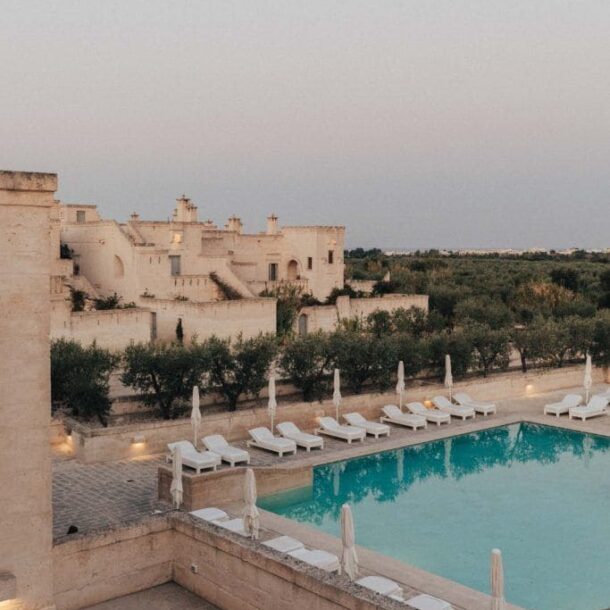
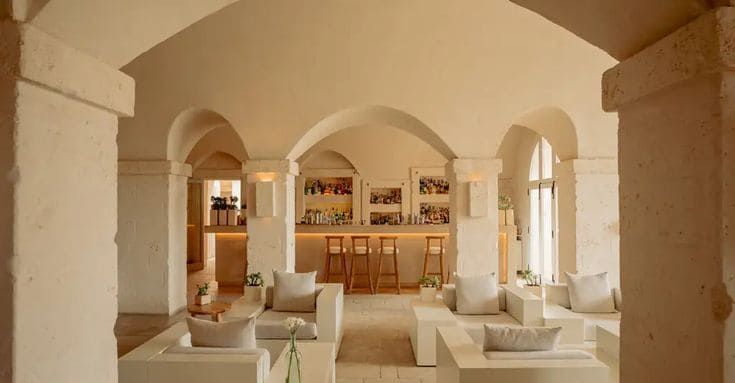
Borgo Egnazia is not a restored historic village. That distinction is important. Opened in 2010, it was designed by architect Pino Brescia and created using local materials, with its architecture inspired by the forms, colours and traditions of Puglian villages.
For me, what makes the result interesting is not simply the architecture. It is the way the architecture supports a way of living.
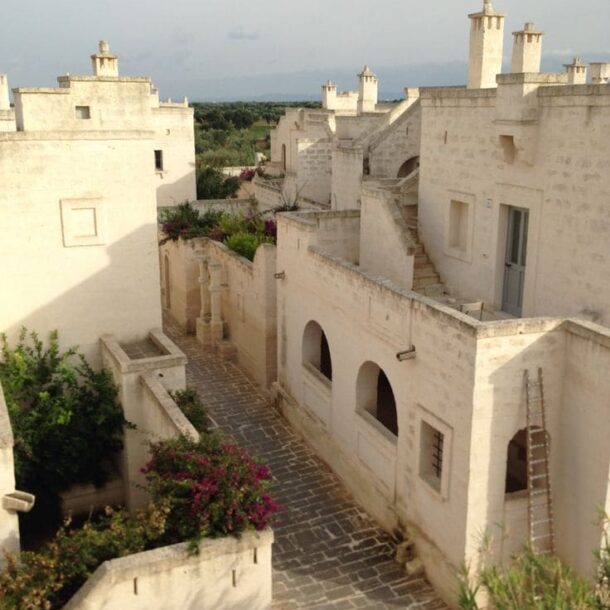
There is La Corte. Beyond it, the Borgo unfolds through narrow stone lanes and small houses towards its Piazza. Further away, the Case offer greater privacy among dry-stone walls, Mediterranean vegetation and private pools.
These are not simply different room categories. For a wedding planner, they represent different layers of experience. And suddenly the wedding weekend has something incredibly valuable: a life between the events.
For me, what makes the result interesting is not simply the architecture. It is the way the architecture supports a way of living.
There is La Corte. Beyond it, the Borgo unfolds through narrow stone lanes and small houses towards its Piazza. Further away, the Case offer greater privacy among dry-stone walls, Mediterranean vegetation and private pools.
These are not simply different room categories. For a wedding planner, they represent different layers of experience. And suddenly the wedding weekend has something incredibly valuable: a life between the events.


The Wedding Does Not Need to Begin at the Ceremony
Imagine guests arriving gradually. They check in. They begin encountering people they know. There is an aperitivo that was never on the official itinerary. Someone stays talking after breakfast. Children recognise each other from the evening before.
By the time the wedding day arrives, something has already happened. A community has formed.
We spend so much time designing the scheduled moments that it is easy to forget the moments between them. Yet those are often where people begin to feel connected. Sometimes our job is simply to create the right conditions for them to happen.
By the time the wedding day arrives, something has already happened. A community has formed.
We spend so much time designing the scheduled moments that it is easy to forget the moments between them. Yet those are often where people begin to feel connected. Sometimes our job is simply to create the right conditions for them to happen.

The Art of Hosting
For me, hospitality is not an additional service surrounding a wedding. It is part of the wedding. And Borgo Egnazia makes that idea particularly tangible.
The property’s philosophy places Puglian hospitality at the centre of the stay. In its private Case, guests can be looked after by a Massaia, whose role draws on the traditions of the Puglian home, while dedicated Local Advisers help shape the guest experience around the region.
True hospitality is rarely about one spectacular gesture. It is cumulative: a welcome that feels sincere, knowing where guests need to be before they have to ask, food appearing at the right moment, clear transportation, time to rest, a table that invites people to stay, the freedom to explore.
The Art of Hosting lives in the details guests may never consciously notice. But they feel them.
The property’s philosophy places Puglian hospitality at the centre of the stay. In its private Case, guests can be looked after by a Massaia, whose role draws on the traditions of the Puglian home, while dedicated Local Advisers help shape the guest experience around the region.
True hospitality is rarely about one spectacular gesture. It is cumulative: a welcome that feels sincere, knowing where guests need to be before they have to ask, food appearing at the right moment, clear transportation, time to rest, a table that invites people to stay, the freedom to explore.
The Art of Hosting lives in the details guests may never consciously notice. But they feel them.
Designing a Wedding Within a World That Already Exists
From a creative perspective, Borgo Egnazia presents a very different challenge from a private villa. We are not creating a world from nothing. We are entering one that already exists.
The stone has a colour. The architecture has a language. The vegetation belongs to Puglia. The Piazza has its own energy. The interiors already carry a strong identity.
I would therefore begin with the same question that guides many of the most interesting Italian venues: What should belong to the place, and what should belong only to the couple?
The destination needs to remain legible. And the couple needs to remain recognisable within it. That intersection is where the design becomes interesting.
The stone has a colour. The architecture has a language. The vegetation belongs to Puglia. The Piazza has its own energy. The interiors already carry a strong identity.
I would therefore begin with the same question that guides many of the most interesting Italian venues: What should belong to the place, and what should belong only to the couple?
The destination needs to remain legible. And the couple needs to remain recognisable within it. That intersection is where the design becomes interesting.
A Wedding Weekend With Rhythm
Having everything available within one destination creates another temptation: doing too much.
I would resist that. The fact that Borgo Egnazia offers restaurants, spa experiences, private beaches and numerous ways for guests to spend their time means we do not have to entertain everyone constantly. Quite the opposite.
A sophisticated wedding weekend needs rhythm. A moment when everyone gathers. A moment when smaller groups naturally form. A major celebration. Then quiet.
The objective is not to make guests finish the weekend thinking: We did so much. I would rather they think: We had time together.
I would resist that. The fact that Borgo Egnazia offers restaurants, spa experiences, private beaches and numerous ways for guests to spend their time means we do not have to entertain everyone constantly. Quite the opposite.
A sophisticated wedding weekend needs rhythm. A moment when everyone gathers. A moment when smaller groups naturally form. A major celebration. Then quiet.
The objective is not to make guests finish the weekend thinking: We did so much. I would rather they think: We had time together.
Let Guests Experience Puglia
Guests have travelled to Italy. The destination should not disappear behind the wedding programme.
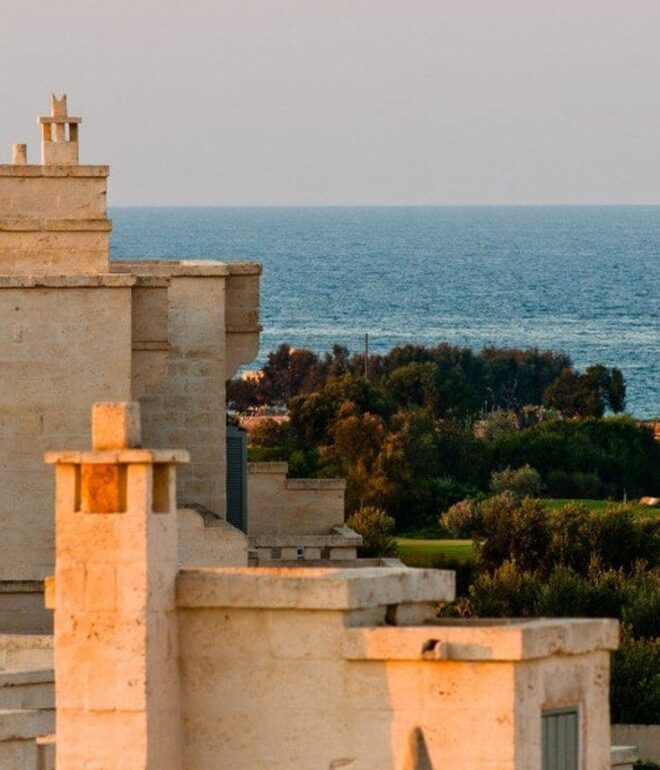
A wedding weekend can introduce Puglia without trying to reproduce every aspect of it inside the wedding. Perhaps guests encounter the sea one day. The countryside another. A relaxed local meal. Then the wedding itself offers a more refined interpretation of the same destination.
The destination does not need to be decorated into existence. Guests are already inside it.
A wedding weekend can introduce Puglia without trying to reproduce every aspect of it inside the wedding. Perhaps guests encounter the sea one day. The countryside another. A relaxed local meal. Then the wedding itself offers a more refined interpretation of the same destination.
The destination does not need to be decorated into existence. Guests are already inside it.
Staying Together Changes Everything
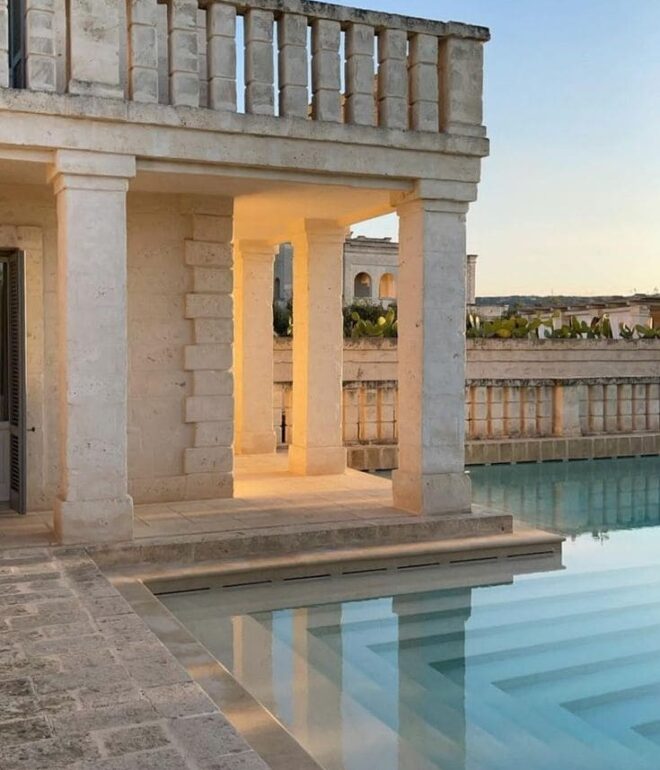
Accommodation is one of the strongest reasons to consider Borgo Egnazia for a destination wedding. The property is organised across La Corte, Il Borgo and Le Case, offering very different ways of staying within the same environment.
For me, room allocation is not merely an administrative exercise. It can be part of the hospitality strategy. Who should be closest to the couple? Where should families stay? Who would appreciate greater independence? Where will guests naturally meet?
This is when accommodation stops being logistics. It becomes part of the experience design.
For me, room allocation is not merely an administrative exercise. It can be part of the hospitality strategy. Who should be closest to the couple? Where should families stay? Who would appreciate greater independence? Where will guests naturally meet?
This is when accommodation stops being logistics. It becomes part of the experience design.
The Moments We Cannot Plan
One of my favourite things about destination weddings is that the memories couples treasure are not always the ones we spent months planning.
Sometimes it is seeing two groups of friends meet over breakfast. A father walking alone through the property before getting ready. Everyone unexpectedly gathering for one last drink. Someone jumping into a pool the morning after the wedding.
We cannot put those moments on a production schedule. But we can create an environment where they are more likely to happen.
The event is what we organise. The experience is everything people remember around it.
Sometimes it is seeing two groups of friends meet over breakfast. A father walking alone through the property before getting ready. Everyone unexpectedly gathering for one last drink. Someone jumping into a pool the morning after the wedding.
We cannot put those moments on a production schedule. But we can create an environment where they are more likely to happen.
The event is what we organise. The experience is everything people remember around it.
Planning Considerations
The advantage of a resort of this scale is that accommodation, restaurants, guest services and multiple experiences can exist within one destination. But that does not make planning automatic. It makes coordination different.
Room blocks and accommodation strategy need to be considered early. Guest movements across several days need to make sense. The wedding programme needs to coexist with the normal operation of a luxury hotel.
When many things are possible, curation becomes more important, not less.
Room blocks and accommodation strategy need to be considered early. Guest movements across several days need to make sense. The wedding programme needs to coexist with the normal operation of a luxury hotel.
When many things are possible, curation becomes more important, not less.

Understanding the Investment
A Borgo Egnazia wedding is another example of why searching for a single “wedding cost” rarely tells the full story. The investment can extend far beyond the event space itself: accommodation, food and beverage, production, floral and event design, entertainment, guest transportation, welcome events, recovery celebrations, activities and potentially several days of hospitality.
The real budgeting exercise is therefore not simply: How much does it cost to get married at Borgo Egnazia? It is: How much of the wedding experience do we want Borgo Egnazia to hold?
The real budgeting exercise is therefore not simply: How much does it cost to get married at Borgo Egnazia? It is: How much of the wedding experience do we want Borgo Egnazia to hold?
A Planner’s Perspective
What interests me most about Borgo Egnazia is that it reminds us of something very simple. People rarely remember a destination wedding as a sequence of design decisions. They remember how those days felt.
They remember arriving. Being welcomed. Finding their friends. Eating together. Staying too long at the table. Dancing. Waking up the next morning and beginning again.
Beautiful flowers matter. Exceptional design matters. The right music, food, lighting and atmosphere matter enormously. But none of them exists in isolation. They are all part of something larger: the way we make people feel when we invite them into a celebration.
That, to me, is the real meaning of The Art of Hosting. Not perfection for its own sake. Not luxury as spectacle. But the quiet intelligence of anticipating how people will experience every part of their time with us.
Because ultimately, the most beautiful weddings do more than gather people in an extraordinary place. They make people feel that they truly belong there.
They remember arriving. Being welcomed. Finding their friends. Eating together. Staying too long at the table. Dancing. Waking up the next morning and beginning again.
Beautiful flowers matter. Exceptional design matters. The right music, food, lighting and atmosphere matter enormously. But none of them exists in isolation. They are all part of something larger: the way we make people feel when we invite them into a celebration.
That, to me, is the real meaning of The Art of Hosting. Not perfection for its own sake. Not luxury as spectacle. But the quiet intelligence of anticipating how people will experience every part of their time with us.
Because ultimately, the most beautiful weddings do more than gather people in an extraordinary place. They make people feel that they truly belong there.
Planning a Wedding at Borgo Egnazia?
Every celebration begins with understanding the place,
the people and the experience you want to create.
the people and the experience you want to create.
LET'S CONNECT
We would love to hear about your celebration.